Why PC Prices Are Rising in 2026: Memory Shortages, Shipments & Market Shifts
The global PC market in March 2026 is undergoing one of its most dramatic shifts in years. Prices are rising, shipment volumes are slowing down, and memory shortages are reshaping how PC builders and consumers think about upgrades. In this blog, we break down what’s happening in the PC hardware market right now — from component costs to buyer behavior and future outlooks.
Memory Prices & Component Cost Inflation
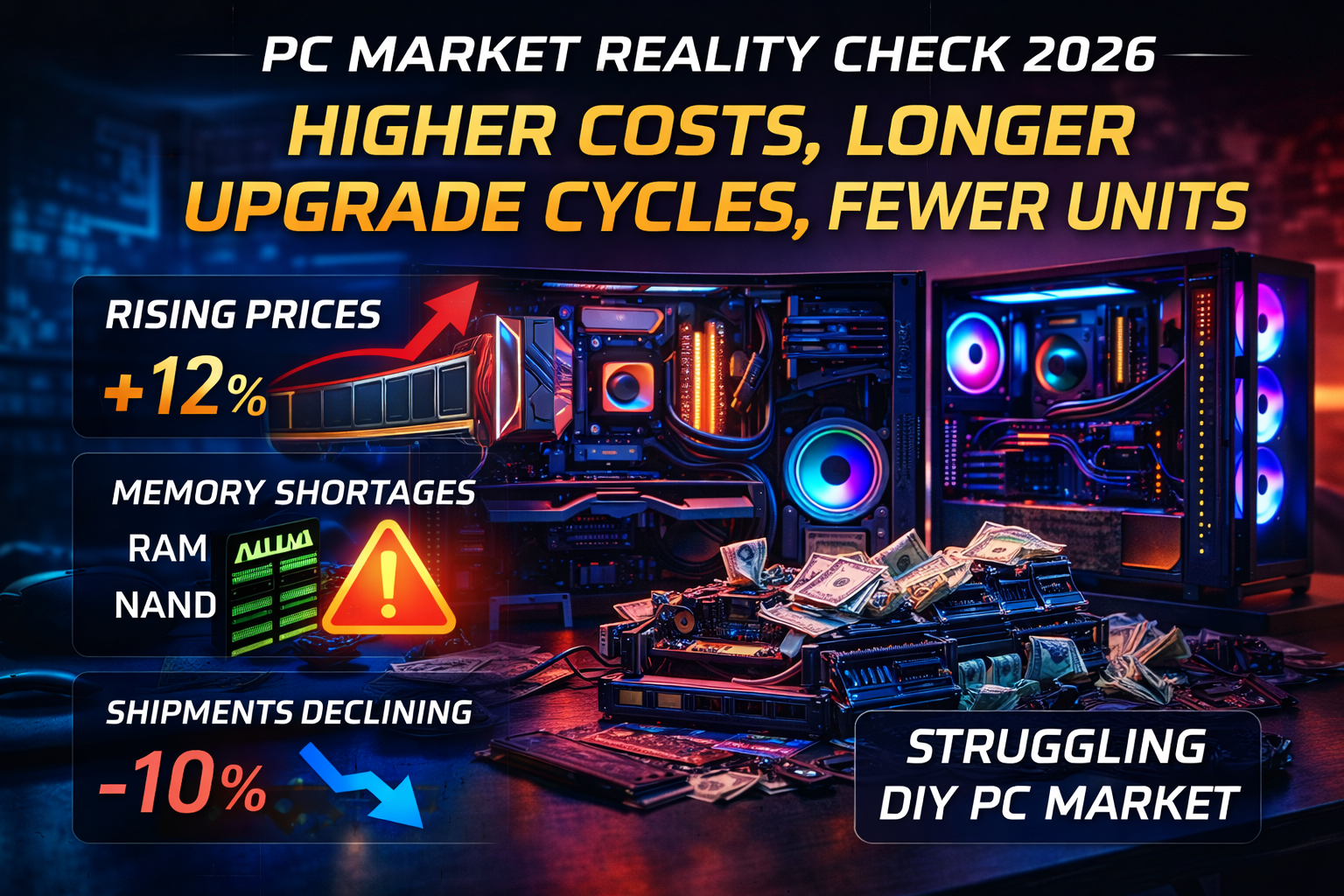
One of the most important stories in the PC market this year is the surge in memory costs. PC makers like HP have reported that RAM now makes up around 35% of the total cost of building a PC, up significantly from previous quarters due to a global DRAM shortage driven by AI data center demand.
- DRAM and NAND flash prices have soared, pushing total PC costs up by 8%–12% globally.
- Enterprises and consumers are seeing memory prices at 3–4× higher than late 2025 levels.
- This component inflation is a key reason PC vendors are warning of reduced shipment volumes in 2026.
PC Shipment Decline Forecast
Market analysts are revising expectations for PC unit shipments in 2026. Multiple forecasts indicate that global PC sales could shrink by up to ~10% this year, largely due to rising costs that are forcing consumers to delay purchases or keep older systems longer.
“Higher memory prices and supply constraints are reducing demand and encouraging longer upgrade cycles — meaning consumers are holding on to devices longer than in previous years.”
Why Buyers Are Hesitating
The dynamics of the 2026 PC market are combining to create a hesitancy among traditional buyers, especially in consumer and gaming segments:
Consumer Market Trends
- Demand may drop 6–8% as buyers put off purchases.
- RAM and storage inflation forces lower-tier builds to cost significantly more.
- Entry-level PCs could become less viable as margins compress.
Enterprise & High-End Demand
- Enterprises may stretch upgrade cycles, holding older systems longer.
- Demand for AI-ready systems remains stronger than basic consumer builds.
- Premium components and configurations remain attractive despite higher prices.
Impact on PC Builders & DIY Market
For DIY builders and system integrators, 2026 is proving to be a challenging year. With DRAM and SSD prices far above historical norms, many enthusiasts are reconsidering upgrades or opting for older generation parts to stay within budget.
On the bright side, premium gaming hardware continues to show resilience — high-end GPUs and CPUs still see demand from enthusiasts willing to pay a premium for top performance.
Innovation & Product Landscape
Despite market slowdowns, 2026 has already brought some exciting innovations. PC vendors are experimenting with modular laptop designs that allow upgraded ports or display configurations without replacing the entire machine.
At the same time, special-edition and collaboration products, such as limited-run gaming PCs tied to Death Stranding themes, continue to attract collector interest and highlight how brand partnerships can influence hardware sales.
Looking Ahead
While the global computer hardware market is projected to grow overall, 2026 stands out as a transitional year for the PC segment specifically, where rising costs and shifting demand patterns could reshape how consumers and businesses approach upgrades.
For builders and buyers alike, the key takeaway is to stay informed, plan upgrades around pricing cycles, and prioritize components that offer the best longevity and performance per dollar as market conditions evolve.